
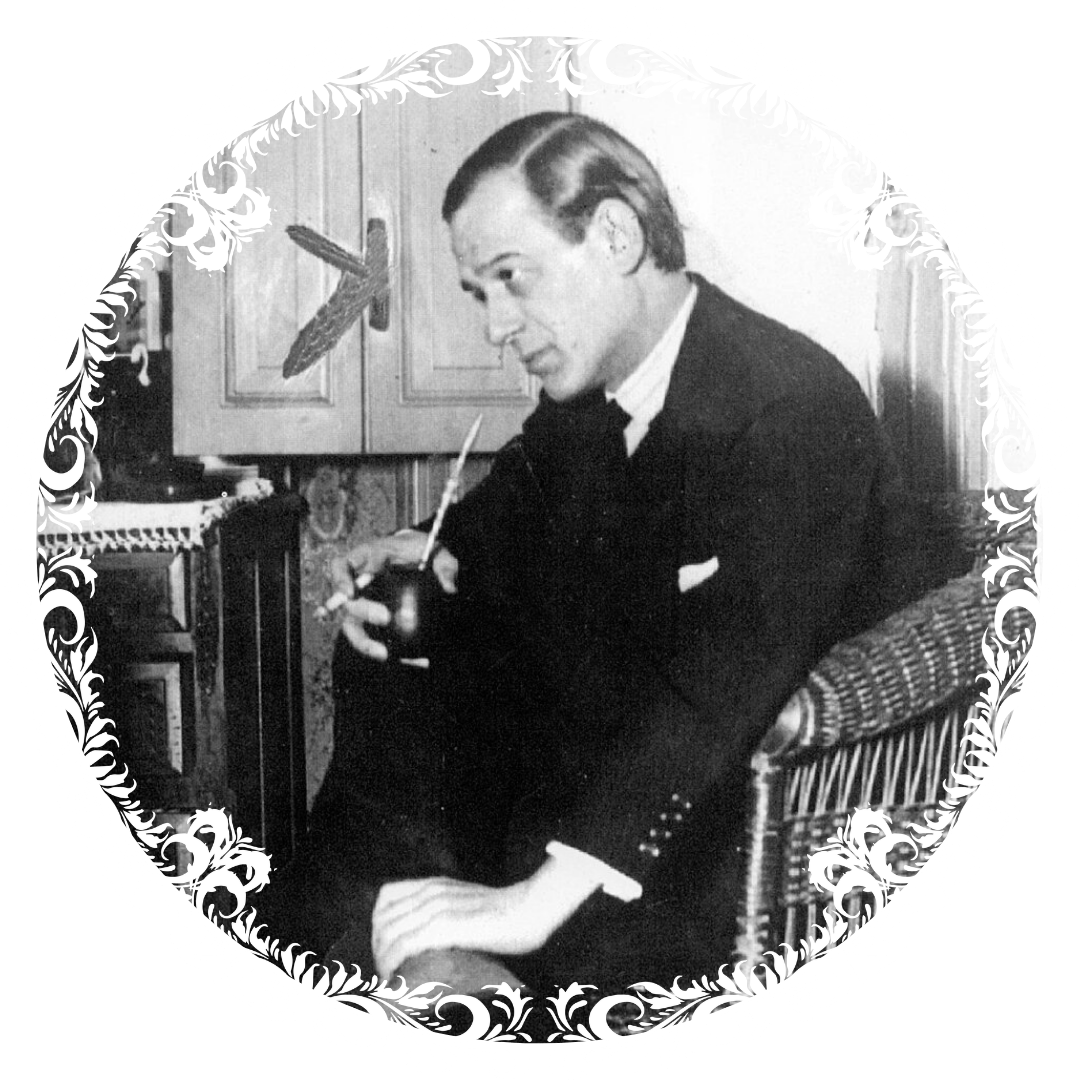
Fuente del retrato
En horizontal ves el original y la traducción.
Elegí tu idioma.
Bandoneón arrabalero.
Original en español · Traducción en English.
ORIGINAL · ESPAÑOL · 01
TRADUCCIÓN · ENGLISH · 01
ORIGINAL · ESPAÑOL · 02
TRADUCCIÓN · ENGLISH · 02
ORIGINAL · ESPAÑOL · 03
TRADUCCIÓN · ENGLISH · 03
ORIGINAL · ESPAÑOL
Arrabalero, fueye y pebete Arrabalero remite a los barrios de las orillas de la ciudad. Fueye es la forma popular de fuelle y nombra al bandoneón por la parte que respira; pebete es un niño. El instrumento aparece como un chico abandonado, no como un objeto sin historia.
Convento, pieza y bulín En este contexto, convento abrevia conventillo: una vivienda de habitaciones compartidas por distintas familias, no un edificio religioso. Pieza y bulín nombran el cuarto donde vive el personaje. Las paredes sin revoque y el farolito sitúan la escena en un entorno humilde.
Una voz para dos abandonados El personaje recoge y acuna al bandoneón; luego le pide que comprenda su propia tristeza. El pecho frío y la voz enronquecida acercan el cuerpo humano al instrumento. La canción construye un diálogo entre dos soledades que se reconocen.
Marcao y berretín Marcao conserva la pronunciación popular de marcado. Berretín puede ser una afición, un deseo insistente o una obsesión; aquí las notas doloridas intensifican una fijación afectiva. La música intenta consolar, pero también vuelve más vivo el dolor.
ENGLISH
Arrabalero, fueye and pebete Arrabalero refers to neighborhoods on the city’s edges. Fueye is the popular form of fuelle, bellows, and names the bandoneon through its breathing part; pebete means a child. The instrument appears as an abandoned boy, rather than an object without a history.
Convento, pieza and bulín Here convento abbreviates conventillo: a dwelling with rooms occupied by different families, rather than a religious convent. Pieza and bulín name the room where the character lives. Unplastered walls and the little streetlamp place the scene in a modest setting.
A voice for two abandoned beings The character takes in and cradles the bandoneon, then asks it to understand his own sadness. The cold chest and the hoarse voice bring the human body close to the instrument. The song creates a dialogue between two lonelinesses that recognize each other.
Marcao and berretín Marcao retains the popular pronunciation of marcado, marked. Berretín can mean a passion, a persistent desire or an obsession; here the sorrowful notes intensify an emotional fixation. Music tries to comfort, but also makes the pain more vivid.
Edición, traducciones y notas culturales: Fórmula Tango — Lucila Cionci & Rodrigo “Joe” Corbata.
RECIBÍ LOS NUEVOS RECURSOS →